Supply Chain Management vs Operations Management: Key Differences
How Supply Chain Management and Operations Work Together
In today's fast-moving business environment, improving efficiency, reducing costs, and enhancing customer satisfaction are a core focus of effective supply chain management and strong operational systems of organizations. While these two functions are very closely linked, understanding the concepts of supply chain vs. operations management is crucial to building resilient and scalable business models. This blog looks into what operations management is, what supply chains entail, and how global supply chain management influences modern businesses.
Operations management is the field of business concerned with the design, operation, and control of processes in the transformation of resources into finished goods or services. It ensures that day-to-day activities run smoothly and efficiently.
Key Functions of Operations Management
Planning and scheduling production
Inventory management
Ensuring product/service quality
Process optimization and continuous improvement
Operations management plays a core role in the internal efficiency of organizations, from productivity and cost control to proper service delivery. Understanding its role is crucial when considering the distinctions between supply chain versus operations management.
What is Supply Chain Management?
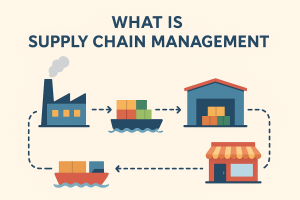
Supply chain management is defined as coordinating activities related to the sourcing of raw materials, producing goods, and delivering them to consumers. It involves suppliers, manufacturers, logistics providers, distributors, and retailers.
Global supply chain management has become indispensable for companies in modern business environments operating across the world’s borders; this creates a tougher challenge to coordinate, comply, and forecast demand.
Supply Chain Management vs Operations Management: Key Differences
Understanding the difference between supply chain vs. operations management requires considering the scope, focus, and objectives of each function.
1. Scope of Activities
Operations management deals with internal processes concerning production, quality control, and the optimization of workflow.
The supply chain management deals with external networks: suppliers, logisticspartners, and distribution channels.
This becomes particularly clear in global supply chain management, where cross-border logistics are at the core, along with supplier relationships.
2. Strategic Focus
While operations management focuses mostly on efficiency, supply chain management emphasizes coordination and collaboration across several entities.
3. Process Orientation
Where operations focused on turning inputs into outputs, the supply chain concerns itself with getting the right inputs to the right place at the right time.
4. Visibility and Integration
The supply chain management necessitates real-time tracking, communication, and multi-level planning. This becomes crucial in global supply chain management, given that any political, environmental, or market reasons could disrupt the whole cycle of operations.
5. Outcome Goals
Operations strive for productivity and cost efficiency.
Supply chains aim for the perfect flow, customer satisfaction, and reduction of lead times.
How Supply Chain Management and Operations Work Together
Although distinct, both functions support each other.
Operations depend on a regular supply of materials.
Supply chains depend on efficient production processes.
Both are targeted towards lower costs, high quality, and on-time delivery.
When considering supply chain vs operations management, especially in competitive industries, the balance among these functions is key to evaluation.
A manufacturing unit that optimizes machine performance.
A retail company managing store inventory
A hospital improving patient flow processes
These internal improvements serve to build stronger systems that connect back into the broader network of supply chain management.
Examples of Supply Chain Management in Business
Coordinating shipments between multiple warehouses
Managing relationships with international suppliers
Forecasting global demand and adjusting production accordingly
Such activities thus form an increasingly important component of global supply chain management for companies importing materials or exporting products across the world.
Why Both Supply Chain and Operations Management are Required in Modern Businesses
No organization can rely entirely on operations or supply chains; both are required for resiliency, efficiency, and growth.
Improved Efficiency
Streamlining operations cuts internal waste, and efficient chains ensure no delay in procurement.
Cost Optimization
Strong systems reduce the cost of production while improving sourcing decisions, a key issue when comparing supply chain vs operations management.
Improved Customer Satisfaction
Fast delivery, consistent product quality, and accurate order fulfillment are all dependent on effective supply chain management.
Competitiveness Globally
With every passing day, the world is getting more interconnected, and companies should adopt global supply chain management to remain competitive on an international scale.
Key Challenges in Operations Management
Resource limitations
Quality control issues
Workforce productivity
Process inefficiencies
These challenges directly affect the dynamics of supply chain versus operations management when companies try to scale.
Key Challenges in Supply Chain Management
Supplier inconsistencies
Transport delays
Regulatory compliance
Demand forecasting errors
Global disruptions – trading wars, pandemics, etc.
Companies engaged in international sourcing must consider global supply chain management in order to mitigate risks and maintain the stability of operations.
Digital Transformation in Operations and Supply Chains
Technology now plays a major role in optimizing operational workflows and supply chain networks.
Digitalization makes both the functions more effective and, therefore, strengthens their overall performance in supply chain versus operations management frameworks.
Supply Chain vs Operations Management: Quick Comparison Table
Aspect
Operations Management
Supply Chain Management
Focus
Internal production, processes
External sourcing, logistics, distribution
Goal
Efficiency, productivity
Collaboration, smooth flow of goods
Scope
Within the organization
Across multiple stakeholders
Impact
Cost Control, Quality
Lead times, customer satisfaction
Complexity
Moderate
High
The Future of Operations and Supply Chain Management
Companies will have increased integration of their operational and supply chain strategies as AI, automation, and predictive analytics take hold.
Trends Shaping the Future
Sustainable sourcing practices
Nearshoring and reshoring
Real-time supply chain visibility
Data-driven operations
Smart factories
These trends put into light the changing relationship between supply chain management and operations.
Additional Insights: Why Integration Matters
The integrated approach in modern organizations combines supply chain management and operations through common data, aligned planning, and coordinated performance metrics. This alignment reduces the effects of silos, optimizes visibility, and proactively supports decision-making around production, procurement, and distribution. In global industries, this is even more important, and companies have to navigate international suppliers, diverse requirements laid out by regulators, and ever-changing market dynamics influenced by the prevailing trends in global supply chain management.A well-integrated system also improves demand forecasting accuracy, minimizes downtime, and enhances overall responsiveness. In all ways, understanding supply chain vs operations management helps businesses institute collaborative planning tools, cross-functional KPIs, and technology-driven workflows. This ensures that the needs of customers are fulfilled quicker and in the most effective way, which optimizes costs and reduces risks simultaneously. As industries become more competitive and digitally advanced, the relationship between production efficiency and end-to-end supply chain flow will keep on defining long-term success.
Conclusion
Understanding supply chain management versus operations management provides a basis on which business leaders can effectively develop workflows that minimize risks, while improving the level of customer satisfaction. While operations management focuses on internal process optimization, supply chain management oversees a wider network that involves sourcing, logistics, and delivery. In these emerging markets and globalizing businesses, effective global supply chain management becomes significant for the sustainability and long-term success of businesses.
By strategically leveraging the strengths of both disciplines, an organization can develop competitiveness, streamline costs, and adapt to any changing market demand.
Frequently Asked Questions
Both fields have their critical relevance, but the choice between them is a matter of one’s interest in either internal processes or the broader networks of business that involve supply chain management versus operations management. Careers in supply chain management often offer more global exposure because of emerging global supply chain management.
When supply chain vs. operations management structures are considered, supply chain management is regarded as an extended function of operations. It extends operations by managing suppliers, logistics, and the global networks through the global supply chain management strategies.
Senior supply chain management roles such as Supply Chain Director or VP draw very top-tier salaries, particularly in multinational companies with global supply chain management functions. When looking at growth in supply chain vs operations management careers, compensation can be all over the board depending on the industry.
Operations management will involve managing internal processes, production systems, and workflow optimization, thus being one of the key pillars in supply chain vs. operations management discussions. The difference is that operations management looks inward, while supply chains at times expand into global supply chain management networks.
Nuthana Reddy
Nuthana Reddy is a Senior Manager at Procter & Gamble, specializing in operations, digitization, and cross-functional leadership. She has driven multimillion-dollar impact through innovation, process optimization, and strategic execution across global markets.

 December 19, 2025
 6 min read




 ChatGPT
 Perplexity
 Claude
 Grok
Grok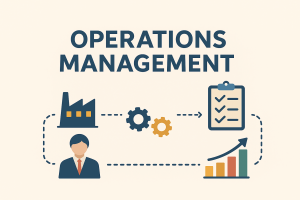










 ROI Calculator