
Data Path Design in Computer Architecture
 April 22, 2025
 6 min read




Table Of Content
- Types of Data Path Design in Computer Architecture
- Components Associated with Data Path
- Computer Architecture Courses
Data path design denotes the physical implementation of any computer’s internal circuitry that boosts data procession and movement. This represents a section of the CPU (Central Processing Unit) that deals with the data section. It requires arithmetic logic units (ALU), registers, and multiplexers’ arrangements. It is a great way to assess the performance and efficiency of a computer’s operations, including fetching, decoding, and executing data. It ensures smooth data flow by encompassing an organisation and interconnections of several components. A well-designed data path can extensively reduce bottlenecks, improve system performance, and optimises resource utilisation. It effectively contributes to the efficiency of computer architecture.
To level up your knowledge, you can take up courses such as the prestigious MCA online degree offered by Manipal University Jaipur. This 24-month course navigates you through the minute details of computer applications, including data path design. From live classes to recorded classes, this course provides flexibility along with proficiency.
In this blog, we will learn about the various types of data path design in computer architecture, various components associated with data path, and the courses which one can take to gain expertise in this field.
 ChatGPT
 Perplexity
 Claude
 Grok
Grok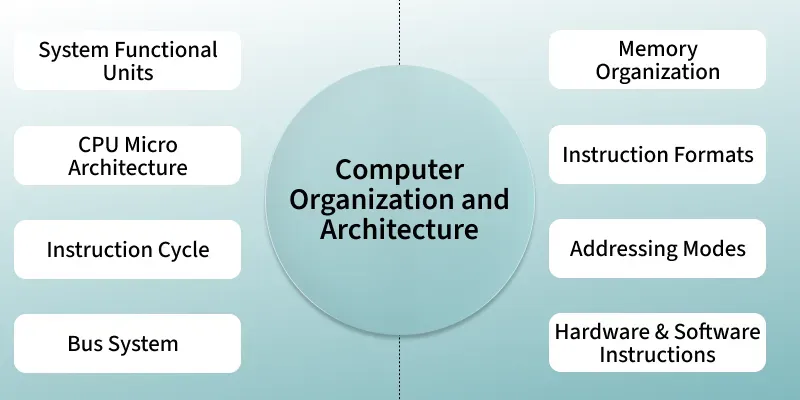
*GeeksforGeeks
Types of Data Path Design in Computer Architecture
The interconnection of BUS with ALU and registers is a data path that will be elaborated on later. These data paths can be broadly divided into three types, as described below.
Single Cycle
This has one CPI (Clock Cycle Per Instruction) and does not divide instructions per CPI. In such data paths, only one instruction is executed at one time. Besides, it does not require any registers. In a single data path, the clock time is longer than the other types. Overlapping the clock cycle cannot be done with such data paths.
Multiple Cycle
Such data paths have variable CPIs. Here, instructions can be segregated into arbitrary steps. Like a single cycle, multiple cycles can also execute only one instruction at one time. However, they need registers to carry further. Moreover, the clock time is shorter than a single cycle. Clock cycle overlapping isn’t possible in the case of multiple cycles.
Pipeline
Such data paths do not have fixed CPIs. Here, per stage, instruction has one step. Unlike single and multiple cycles, pipelines can execute multiple instructions at one time. With that, it requires registers. Like multiple-cycle data paths, the pipeline also requires a short time per clock cycle. Plus, a clock cycle occurs in the case of pipeline data paths.
Components Associated with Data Path
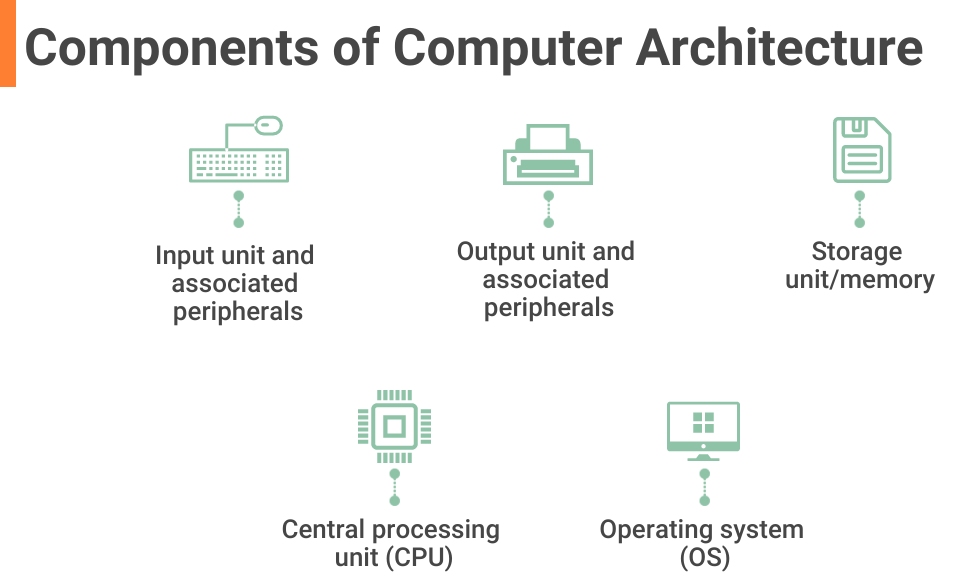
To execute the proper operation of a computing system, the function units of the data path play a crucial role. Below are the primary function units that are an inevitable part of data path design.
*Spiceworks
Arithmetic Logic Unit (ALU)
It is one of the fundamental components of the data path. ALU performs logical arithmetic operations on data like addition, subtraction, division, multiplication, comparisons, and bitwise operations. ALU primarily takes input data from the register and performs an operation on the data to produce the necessary output. It operates on binary data, manipulating bits based on the control signals received from the control unit.
Registers
These are small storage elements in a processor known for their high speed. While processing data, it stores the data temporarily. These data can be either intermediate results, operands, or program counters. Registers are important for fast data access, decreasing the requirement of retrieving data from memory, which slows down the operation. Two types of registers are available to serve different purposes. General-purpose registers are required to hold data during computation. On the other hand, special-purpose registers store program status flags or addresses.
BUS
It is a communication system that transfers data between various components of a computer or between two computers. BUS is a collection of hardware components, including optical fibers and wire. It also has software components, like communication protocols. It allows data and instructions movement between memory, registers, and other peripherals. ALU, registers, and various BUS together are termed as data paths.
Multiplexers
A data path also has multiplexers. These are required to select data from multiple sources and route these to an appropriate destination. Multiplexers are essential for the movement of data within a processor—these help in selecting from different inputs along with directing them to the component on the focal point. For instance, a multiplexer may choose between two registers to evaluate and source the ALU operation.
Control Unit
Any data path interacts with the control unit. This unit generates control signals that coordinate the data path component’s activities. It interprets instructions fetched from memory and generates the necessary signals to control data movement, ALU operations, and register manipulations. These units ensure the proper execution of instructions in the right sequence. Besides, it ensures a synchronised data path function.
Computer Architecture Courses
Computer architecture courses dwell on how computer systems are designed, structured, and optimized for performance. These courses help the learners understand the hardware-software interaction and the principles behind modern computing systems. Following is the list of some popular computer architecture courses and their descriptions:
1. Introduction to Computer Architecture
A foundational course on how processors, memory hierarchies, and instruction sets interact in the design of a computer system.
Builds intuition for hardware–software interaction, performance metrics, and basic system trade-offs.
2. Fundamentals of Computer Architecture
Covers logic gates to simple computers, machine-level programming, and performance modeling of modern architectures.
Prepares you to analyze how hardware primitives enable parallelism and security in computing systems.
3. Computer Architecture
Focuses on designing modern microprocessors: instruction sets, micro-architecture, caches, and multiprocessor systems.
It is targeted at software engineers or hardware enthusiasts who want insight into how systems are built and optimized.
4. Advanced Computer Architecture
Covers the design of high-performance systems: superscalar execution, advanced pipelining, memory hierarchies, and multicore issues.
Designed for learners who are relatively comfortable with basic architecture and looking to understand performance-critical and large-scale systems.
5. Computer System Architecture
Examines the evolution of architectures from instruction set design to multicore and parallel machines including system–software interaction. Lays the groundwork for research or design careers in architecture, embedded systems, and large-scale computing platforms.
6. Digital Systems: From Logic Gates to Processors
Starts with circuitry concepts like logic gates and number systems, progressing to processor design and instruction execution. It is ideal for beginners, hobbyists, or programmers who want to understand the basics of computer hardware.
Final Words
Data path design plays a critical role in computer architecture. This ensures efficient processing, movement, and manipulation of data within a system. The components of data path design, such as registers, buses, multiplexers, the Arithmetic Logic Unit (ALU), and the control unit, work in harmony to enable seamless data flow and execution of instructions. With the advancement of technology, data path design will keep evolving and continue shaping the future of computer architecture.
To explore data path design and other essential aspects of computer architecture, joining the online MCA degree programme at Manipal University Jaipur is definitely the right choice. With this course, you get free access to Google Cloud computing and Coursera foundations. Join now with Jaro Education and revamp your career.
Frequently Asked Questions
A data path is a well-known component that handles processing and data movement in computer architecture from registers to memory. Understanding data path design helps gain insight into how instructions can be optimally executed within a CPU.
In a computer, the data path constitutes the circuitry through which data are transferred and processed during the execution of instructions. In computer architecture, efficiency in the design of a data path ensures faster performance and better resource utilization.
Steps of datapath include instruction fetch, decode, execute, memory access, and write-back. These stages explained the methodology behind executing command instructions by the processor, as learned in computer architecture courses.
The four types of computer architecture are Von Neumann, Harvard, Instruction Set, and Microarchitecture. Learning about them in the computer architecture course would equip one with a firm grounding in data path design and system efficiency.

Find a Program made just for YOU
We'll help you find the right fit for your solution. Let's get you connected with the perfect solution.

Is Your Upskilling Effort worth it?
 ROI Calculator

Are Your Skills Meeting Job Demands?
Try our Skill Gap tool
Experience Lifelong Learning and Connect with Like-minded Professionals
Explore Jaro Connect

