
What is Capacity Planning? Types, Goals, Benefits
 November 3, 2025
 8 min read




Table Of Content
- What is Capacity Planning?
- Why Capacity Planning Matters for Businesses
- Types of Capacity Planning
- How Businesses Combine Them
In business terms, capacity planning is the art (and science) of making sure you have just the right amount of resources. These resources can be people, equipment, or technology to meet demand without overburdening your system or letting assets sit idle.
In theory, the concept appears straightforward, but how does it actually work in practice? It’s a constant balancing act.
By the definition, you might think the issue is mostly a manufacturing problem; however, it extends to diverse industries. IT teams use it to figure out server loads. Hospitals rely on it to staff doctors and nurses. Logistics firms depend on it to schedule fleets. Even marketing teams indirectly do it when they plan campaign bandwidth.
So, let’s unpack what capacity planning really is, why it matters, and the different ways companies approach it.
 ChatGPT
 Perplexity
 Claude
 Grok
GrokWhat is Capacity Planning?
Capacity planning is basically answering the question:
“Do we have the right amount of resources to deliver on our commitments, now and in the future?”
The “resources” could be:
- Human resources: The people doing the work.
- Physical resources: Machinery, vehicles, and infrastructure.
- Digital resources: Cloud servers, storage, and computing power.
The catch here is that it’s not just about meeting today’s workload. Good capacity planning looks ahead weeks, months, even years to anticipate what’s coming. That’s where capacity modelling comes in, which means running different scenarios, “What if” situations, and demand forecasts to make sure you’re well prepared for both busy and quiet periods.
But as intriguing as it appears, it is also tricky because demand rarely stays constant. It fluctuates due to market shifts, seasonality, unexpected disruptions, or even a viral product launch you didn’t see coming.
Capacity planning, however, when strong, allows you to adjust without too much panic. If it’s weak, well, you end up firefighting, which is never a sustainable business strategy.
Why Capacity Planning Matters for Businesses
Types of Capacity Planning
How Businesses Combine Them
The important part is understanding the moving pieces and how they affect each other. Add or remove capacity in one area, and it ripples through the whole system.
Capacity Modeling in Decision-Making
It’s where you take numbers, forecasts, and scenarios and test them before making a decision.
Here’s how it often works:
- Scenario building: “What if our sales increase by 25% next quarter due to festivals?”
- Impact analysis: “Do we have enough trained staff? Do we need more suppliers?”
- Risk assessment: “If one supplier fails, what’s Plan B?”
Key Goals of Capacity Planning
- Matching supply with demand: This is the obvious one, making sure you can meet demand without wasting resources.
- Optimising resource usage: It’s not just about having enough but using what you have efficiently. Idle resources cost money, but so does overworking them until they break.
- Staying flexible: Markets shift, competitors change pricing, and technology evolves. A good capacity plan isn’t rigid; it can bend without snapping.
- Reducing operational risks: When you know your limits and your buffers, you avoid nasty surprises.
- Supporting strategic growth: If you’re planning to scale, you can’t just “wing it” and hope resources magically align. Strategic capacity planning lays the groundwork.
Benefits of Effective Capacity and Planning
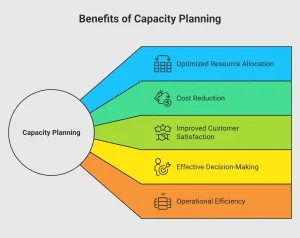
When companies actually do this well, the benefits stack up fast.
- Consistent delivery: Customers love reliability more than flashiness.
- Higher productivity: You’re getting the most out of your resources without pushing them into the red zone.
- Lower costs: No unnecessary hires, no wasted equipment leases, fewer emergency fixes.
- Happier employees: Less overtime, less firefighting, and more breathing room.
- Better reputation: In B2B, being known as the company that “always delivers” is priceless.
Common Challenges (and How to Tackle Them)
- Unreliable forecasts: Blend historical data with market research, and don’t rely on one source of truth.
- Sudden demand spikes: Keep buffer capacity — whether that’s extra staff on call, backup suppliers, or scalable tech infrastructure.
- Resource constraints: Prioritise projects, outsource non-core work, and focus on high-margin operations first.
- Resistance to change: The fix: Bring stakeholders into the process early. People resist less when they feel involved.
How Can Jaro Education Help You Turn Capacity Planning into a Career Advantage
That’s exactly the space Jaro helps you step into.
At Jaro Education, we’ve built partnerships with India’s leading institutions so that working professionals like you can gain the kind of strategic, big-picture thinking that turns a technical skill like capacity planning into a leadership advantage.
Now, we are going to get into the main part, which is programs that align perfectly with this career path. The popular ones are:
Learn how to design, optimise, and manage operations at scale, with a strong focus on supply chain, production strategies, and resource planning — all key pillars of capacity planning.
Ideal for experienced professionals aiming for senior leadership roles. Covers operations strategy, decision sciences, and strategic resource allocation, helping you embed capacity planning into organisational strategy.
A comprehensive program that blends business fundamentals with advanced modules in operations and project management, giving you the ability to plan, forecast, and execute at a higher level.
With the right program, you’re not just learning how to plan resources, you’re building the credibility, network, and strategic perspective to lead those decisions..
Conclusion
So, if you’re ready to step beyond firefighting and start leading with foresight, capacity planning is a skill worth investing in, and Jaro has the programs to get you there.
Frequently Asked Questions
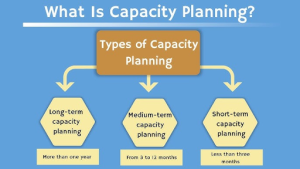
Typically, the types include workforce capacity planning, production capacity planning, and tool/infrastructure capacity planning. Most organisations use a mix.
Planning is forward-looking; management is ongoing and reactive.
Even simple spreadsheets tracking workload, resource availability, and demand patterns can make a huge difference.
Find a Program made just for YOU
We'll help you find the right fit for your solution. Let's get you connected with the perfect solution.
Is Your Upskilling Effort worth it?
 ROI Calculator

Are Your Skills Meeting Job Demands?
Try our Skill Gap tool
Experience Lifelong Learning and Connect with Like-minded Professionals
Explore Jaro Connect

