
Calculus in Data Science and its Uses
 January 16, 2023
 4 min read




Table Of Content
- Why is Calculus so Essential in Data Science?
- Applications of Calculus in Data Science
- How Calculus Aids Other Data Science Methods
- Learning Calculus for Data Science
Now, to answer the primary question, what is calculus? Calculus is a fundamental branch of mathematics that is used to describe how things change. It deals with such notions as slopes, curves, rates of change, etc., and is necessary in solving many real-world problems. Simply put, calculus in the data science profession helps the data scientist analyze and understand what the data has to say regarding the nature of change with one or more factors.
In data science, we leverage calculus in order to be more accurate and efficient in our models. Calculus helps us with finding patterns, optimizing algorithms, and predicting better outcomes in considerations like machine learning and artificial intelligence. You can see calculus in action in such methods as gradient descent, which teach the machine to learn by reducing errors.
By understanding calculus in data science, we can observe how small changes in data can lead to big impacts on results. In this blog, we will explore what calculus in data science is, along with its main uses and real-world applications.
 ChatGPT
 Perplexity
 Claude
 Grok
GrokWhy is Calculus so Essential in Data Science?
Optimization is the heart of much of data science models — determining the optimal possible result from a dataset. This is where calculus in data science becomes very useful. Calculus assists in minimizing or maximizing a function, and this is essential in enhancing the precision of machine learning models.
For example, during model training, data scientists attempt to reduce the “error” — the discrepancy between predicted and true values. This is an operation, gradient descent, which depends a great deal on calculus. Derivative, a fundamental function of differential calculus, assists in the step-by-step alteration of the parameters of the model to it attain the minimum error level. Without calculus, this kind of optimization would not be feasible.
Briefly, calculus in data science gives the mathematical foundation that enables machines to learn from data, enhance predictions, and make more informed decisions.
Applications of Calculus in Data Science
Calculus plays an important role in data science across various areas, from basic data analysis to machine learning and artificial intelligence. Let’s look at some major applications of calculus in data science.
- Optimization in Machine Learning
One primary application of calculus in data science is its optimization in machine learning. Most machine learning algorithms use calculus-based optimization. For example, gradient descent uses derivatives to update the parameters of a model and reduce the overall loss. This process repeats until the model provides the most accurate results possible. Calculus in data science makes it easier to understand and control this process effectively.
- Neural Networks and Deep Learning
In deep learning, calculus adjusts the weights and biases of a neural network during training. Each neuron learns by updating its parameters based on the rate of change calculated using derivatives. This helps the model minimize error and improve accuracy. Without calculus in data science, neural networks would struggle to learn efficiently from data.
- Data Visualization and Curve Fitting
When data scientists visualize data, they often fit curves to represent relationships between variables. Calculus helps identify the best-fitting curves using techniques like regression analysis. The use of calculus in data science ensures that data visualizations are not just appealing but also mathematically accurate.
- Predictive Modeling
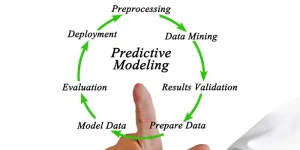
Predictive models utilize calculus to predict future patterns. By determining how a variable changes over time, data scientists are able to forecast future values. For example, in finance, calculus aids in modeling the movement of stock prices and in healthcare, it aids in forecasting patient recovery rates. These are instances of calculus in data science having a quantifiable effect.
- Probability and Statistics
Several concepts in statistics and probability, including probability density functions and distributions, incorporate integration — one of the most important components of calculus. Data science employs calculus in calculating probabilities within continuous ranges, which becomes crucial for activities such as risk assessment and anomaly detection.
How Calculus Aids Other Data Science Methods
Though calculus may appear daunting, it serves as the basis for numerous methods data scientists employ on a daily basis. Linear regression, logistic regression, and cluster models all depend upon calculus-derived optimization. Data science also utilizes calculus in algorithms that need precise tuning to allow models to gradually become more refined.
Even preprocessing of data — the precursor to building models — occasionally needs calculus. Smoothing noisy data, for instance, or determining trends often requires integration over datasets. Calculus, therefore, in data science is not merely theoretical; it’s intricately related to real-world applications.





Learning Calculus for Data Science
Many aspiring data scientists feel nervous about learning calculus. However, understanding the basics of derivatives and integrals is often enough to see how they power data models. Online courses, tutorials, and data science programs often include sections on calculus to help learners connect math concepts with real-world data problems.
The focus should be on how calculus helps optimize models, interpret results, and make precise predictions. With practice, these mathematical tools become second nature, enabling professionals to create stronger and smarter analytical solutions.
Conclusion
In today’s data-driven world, understanding change is more crucial than ever. That’s exactly what calculus helps us achieve. Using calculus in data science allows professionals to optimize algorithms, improve predictions, and find important insights from complex datasets.
From machine learning to predictive analytics, calculus in data science is essential for many intelligent systems that simplify our lives, from recommendation engines to self-driving cars.
In this blog, we discussed what calculus in data science is and its main uses and applications. By mastering this core mathematical concept, aspiring data scientists can improve their analytical skills and build a solid foundation for a successful career in the data-driven future.
Frequently Asked Questions
Yes, calculus in data science is commonly used to optimize algorithms, analyze trends, and improve prediction accuracy. It helps data scientists see how small changes in data can impact overall model performance.
Calculus in data science and AI/ML is mainly applied using techniques like gradient descent to train models. This process allows machines to learn by reducing errors and adjusting parameters for better accuracy.
A basic understanding of calculus in data science is important, but advanced topics from Calc 2 aren’t always necessary. Knowing the fundamentals of differentiation and integration is usually enough for most data science applications.





Find a Program made just for YOU
We'll help you find the right fit for your solution. Let's get you connected with the perfect solution.

Is Your Upskilling Effort worth it?
 ROI Calculator

Are Your Skills Meeting Job Demands?
Try our Skill Gap tool
Experience Lifelong Learning and Connect with Like-minded Professionals
Explore Jaro Connect
