Employers test seven interview skills: preparation, clear communication, structured storytelling, problem solving, listening and body language, composure, and follow-up.
The most reliable job interview tips are to research the company, rehearse three to five stories using the STAR method, and tie every answer to the job description.
Interview questions related to communication test clarity and brevity. Problem-solving interview questions test how you reason, not only what you decide.
Different interview techniques suit different formats: panel, video, phone and in-person rounds each need their own setup.
These job interview tips are easy to apply: aim for 60–90-second answers, arrive 10–15 minutes early, and send a thank-you note within 24 hours.
These job interview tips start with one fact: experienced candidates usually lose interviews on delivery, not on qualifications. A hiring manager already has your resume, so the interview checks how you think, explain, and respond under mild pressure. These seven interview skills cover most of what interviewers assess, and you can practise each one.
The following tips cover seven essential interview skills that can help you make a positive impression and demonstrate your suitability for the role.
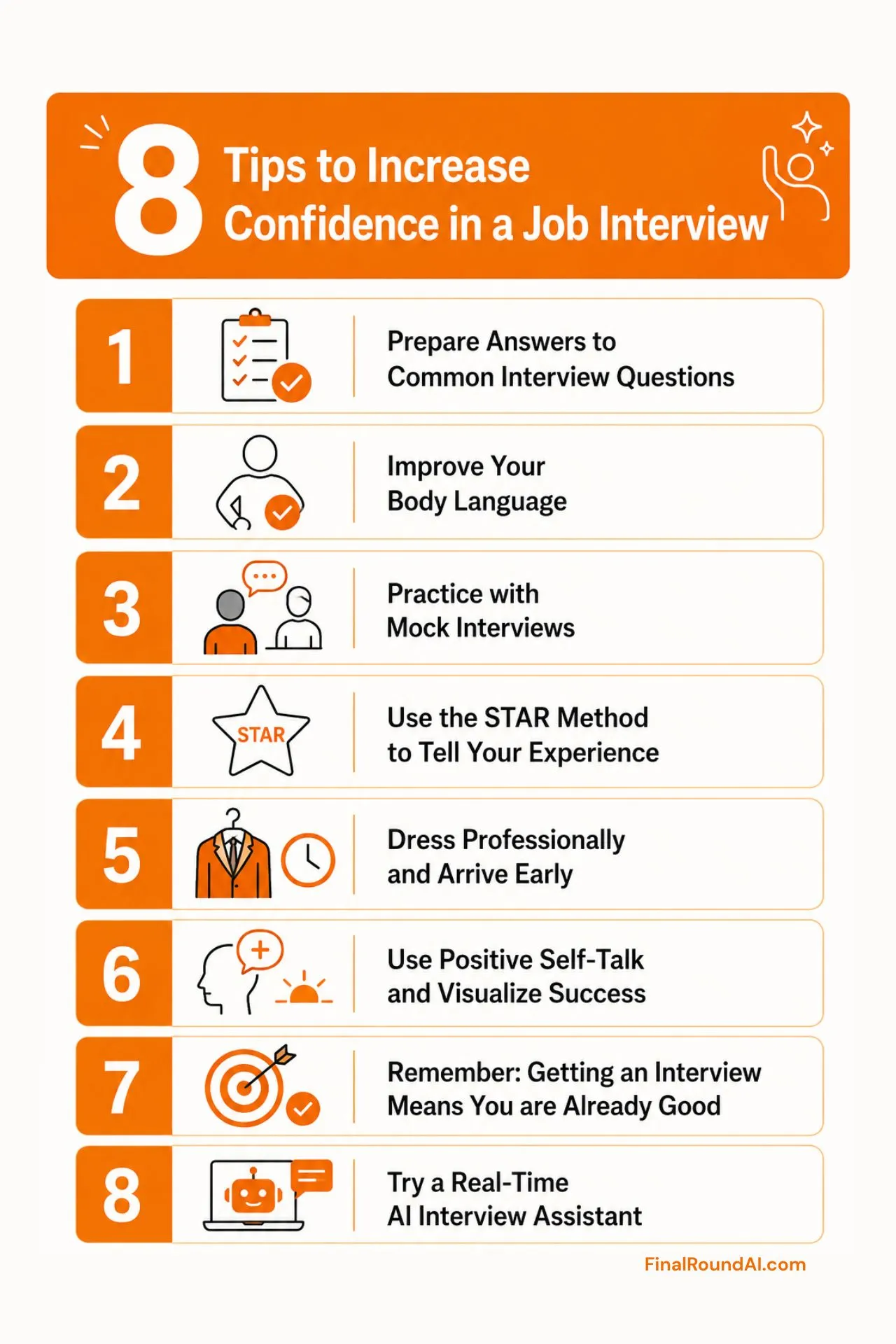
Credit: finalroundai.com
1. Preparation and Company Research
Preparation is the interview skill that shows up first, and the other interview skills depend on it. Read the company website, recent news and the job posting. Note the products, customers and problems the team is likely to face.
A Jobscan roundup of recruiter surveys reports that 47% of hiring managers would not hire someone who knew little about the company, and that 76.4% of recruiters filter by skills in the job description. Among all job interview tips, this is the easiest to act on. Treat the posting as your study guide; you can pick a requirement and an example from your own work that proves it.
2. Clear Communication
Of all interview skills, clear communication is the most visible. Good communicators answer the question that was asked, in a sensible order, without wandering. Aim for 60–90 seconds per answer, lead with the point, and add detail only if the interviewer asks.
Filler words such as “um” and “like” are better replaced with a short pause. Mid-career candidates often over-explain because they have so much to say, so one of the best job interview tips is to practise cutting every answer by a third.
3. Problem Solving
Interviewers use problem-solving interview questions to see how you approach an unfamiliar situation. They care about your reasoning more than a perfect answer.
Clarify the problem, state your assumptions, break it into parts, work through options, and explain the trade-offs. If you are unsure, say what you would check first. Thinking aloud in an ordered way scores better than going silent.
4. Structured Storytelling with the STAR Method
Most behavioural questions are answered best with the STAR method: Situation, Task, Action and Result. Set the scene briefly, state your specific responsibility, describe what you personally did using “I” rather than “we”, and close with a measurable result.
Prepare three to five stories covering a win, a failure, a conflict, and a project you led. One strong story can answer several questions, so build a small set and adapt it.
5. Active Listening and Body Language
Listening shows up in how well your answer fits the question. Pause before responding, and refer back to something the interviewer said earlier. Sit upright, keep steady eye contact and smile naturally. On video, look at the camera when you speak. Watch the interviewer too: leaning in suggests interest, while glancing at the clock suggests you should wrap up.
6. Composure Under Pressure
Nerves are normal, and interviewers look at recovery rather than perfection. If you lose your thread, take a breath, say “let me reorganise that” and restart. If a question catches you off guard, a few seconds of silence reads as thought, not weakness.
Among practical job interview tips, a short pre-interview routine, such as slow breathing and a quick review of three past wins, helps steady your delivery.
7. Asking Questions and Following Up
The end of the interview is part of the assessment. Prepare questions about what success looks like in the first six months, how the team makes decisions, and what challenges the role faces. These show you are judging the employer as well.
Afterwards, send a brief thank-you note within 24 hours that mentions one specific point from the conversation.
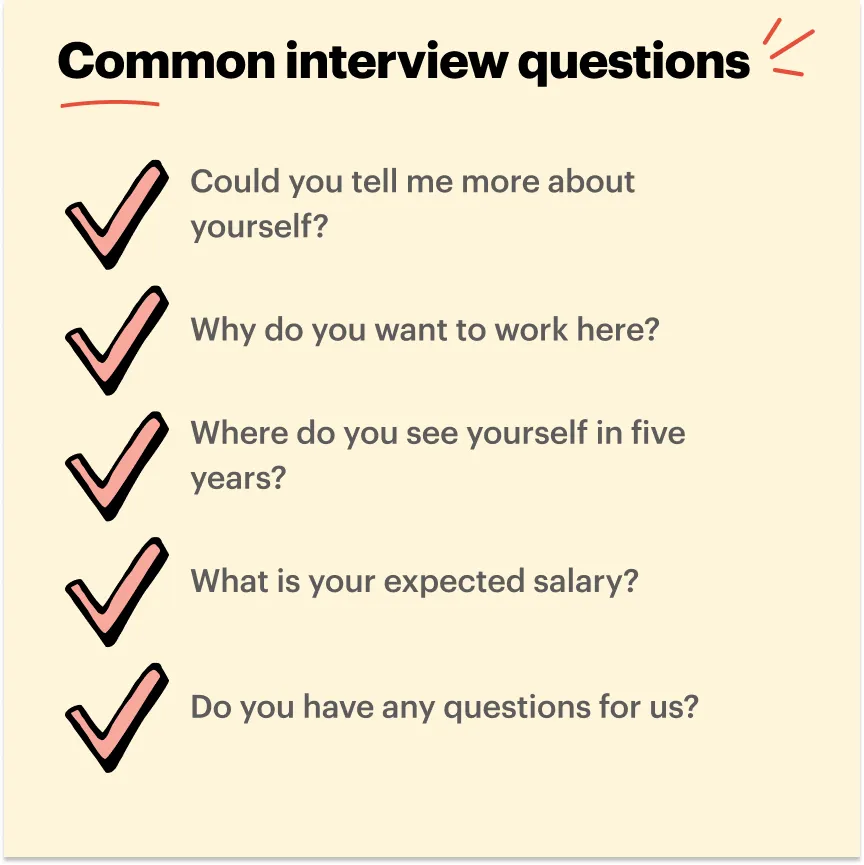
Interview questions related to communication look simple, but each one tests something specific. The table lists common ones and what the interviewer is checking.
Question
What the Interviewer Is Checking
How to Answer
Tell me about yourself
Whether you can summarise your career clearly
Give a 60–90 second story: present role, key achievements, why this job
Why are you interested in this position?
Whether you researched the role
Link two or three job requirements to your experience
Tell me about a time you went above and beyond
Initiative and ownership
Use STAR and end with a measurable resul
Do you have any questions for me?
Curiosity and judgement
Ask about success measures and team priorities
Why do you want to leave your current job?
Professionalism
Focus on what you are moving toward, not what you dislike
For all interview questions related to communication, finish with a clear end to the answer. Stopping on a result such as “we cut turnaround time by 20%” sounds more confident than trailing off.
Problem-Solving Interview Questions
Problem-solving interview questions usually take the form “tell me about a time when…” or a short hypothetical. For the first type, use STAR and spend most of your time on the action and result. For the second, talk through your method.
Common examples include: describe a time you overcame a challenge at work, explain a mistake you made and what you changed afterwards, and tell us how you handled a difficult colleague. Strong answers own the problem, show the options you weighed and name what you learned. If you are asked a hypothetical, such as how you would handle a missed deadline, start by asking clarifying questions. That alone signals a structured thinker.
To practise problem-solving interview questions, write down one real project from the past year: the problem, the options, your decision, and the result.
Free Courses
Stakeholder Communication & Negotiation Skill Sets
The most dependable job interview tips are practical ones. Before the interview, research the company, re-read the job posting, rehearse answers aloud, and prepare questions for the interviewer. Test your route or video link the day before.
During the interview, keep answers concise, tie examples to the job requirements, and avoid criticising past employers. Take responsibility where something went wrong. If salary comes up early, give a range based on market research and emphasise the value you bring, rather than naming a single figure too soon. Ask about next steps before you leave.
After the interview, send a short thank-you note within 24 hours. If you have heard nothing by the timeline you were given, send a polite follow-up. These job interview tips are small, but together they separate prepared candidates from average ones.
Common Mistakes to Avoid
Most job interview tips are about avoiding the same errors that cost people offers repeatedly. Arriving with little knowledge of the company is the most common. Rambling answers come next, followed by speaking negatively about a past manager, checking your phone, and skipping the follow-up. Another frequent mistake among experienced candidates is describing team results without stating their own part. Among job interview tips, this one fixes the most answers: say “I” when it applies.
Interview skills improve with deliberate practice, and the seven interview skills above are the place to start. Start with the weakest one: if you ramble, time your answers; if you freeze on hypotheticals, rehearse problem-solving interview questions; if nerves are the issue, build a short routine. Pair these job interview tips with an honest review of your career gaps and you will walk in better prepared than most.
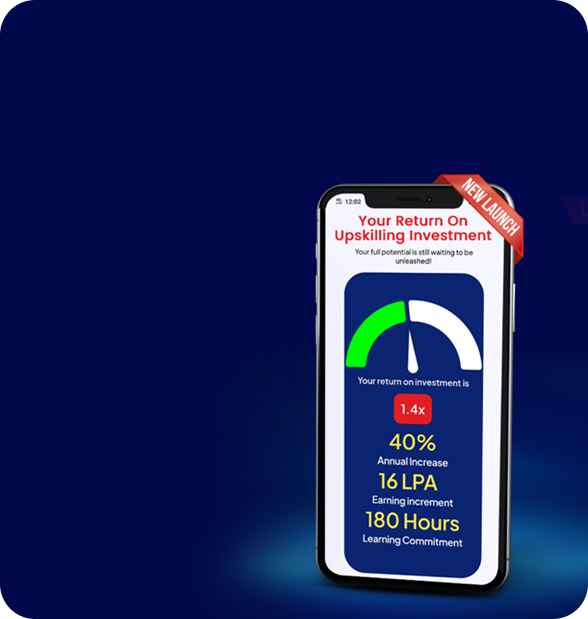
If you are weighing a career move or an upskilling programme, assessing your Skill Gap shows where your skills stand against job demand, and an Executive Academic Counsellor can help you compare programmes before you commit.
Frequently Asked Questions
The best job interview tips are simple: research the company, rehearse three to five STAR stories, tie answers to the job description, keep answers to 60–90 seconds, and send a thank-you note within 24 hours. Preparation and clear communication matter more than any single trick, so use these job interview tips together.
The key interview skills employers assess are preparation, clear communication, structured storytelling, problem-solving, active listening, composure, and follow-up. Each of these interview skills can be practised before the interview.
Lead with the main point, use an example, give a measurable result, and stop. Aim for 60–90 seconds. Tell me about yourself and why this role are the most common prompts.
Typical ones include describing a challenge you overcame, a mistake you made and how you fixed it, and how you handled a difficult colleague. Use STAR and spend most of the answer on your action and the result.
STAR stands for Situation, Task, Action, and Result. It gives behavioural answers a clear order: set the scene, state your role, describe what you did, and close with the outcome.
Most answers work best at 60–90 seconds. Go shorter for simple questions.
Dress one step above the usual dress code at the company.
One of the simplest job interview tips is to use slow breathing, recall three past achievements, and rehearse your opening answer aloud. A short routine in the 15 minutes before you start helps steady your voice.
Yes. Send a brief note within 24 hours, mention one specific point from the discussion, and restate your interest in the role.
Among job interview tips for mid-career candidates, mock practice ranks high. Practise with a friend or record yourself, then review clarity, length, and eye contact. Adjust your interview techniques for video, phone, and panel rounds, and gather feedback after each real interview.
Bhargavi R
HR Professional
Bhargavi Reddy is an HR professional with over 6 years of experience in IT recruitment and talent acquisition. She specializes in hiring across technologies like Java, DevOps, Python, and Data Engineering. With strong expertise in full-cycle recruitment and stakeholder management, she focuses on building high-performing teams. Currently, she works as an HR Manager driving strategic hiring initiatives.

 April 8, 2025
 6 min read




 Key Insights
 ChatGPT
 Perplexity
 Claude
 Grok









 ROI Calculator